
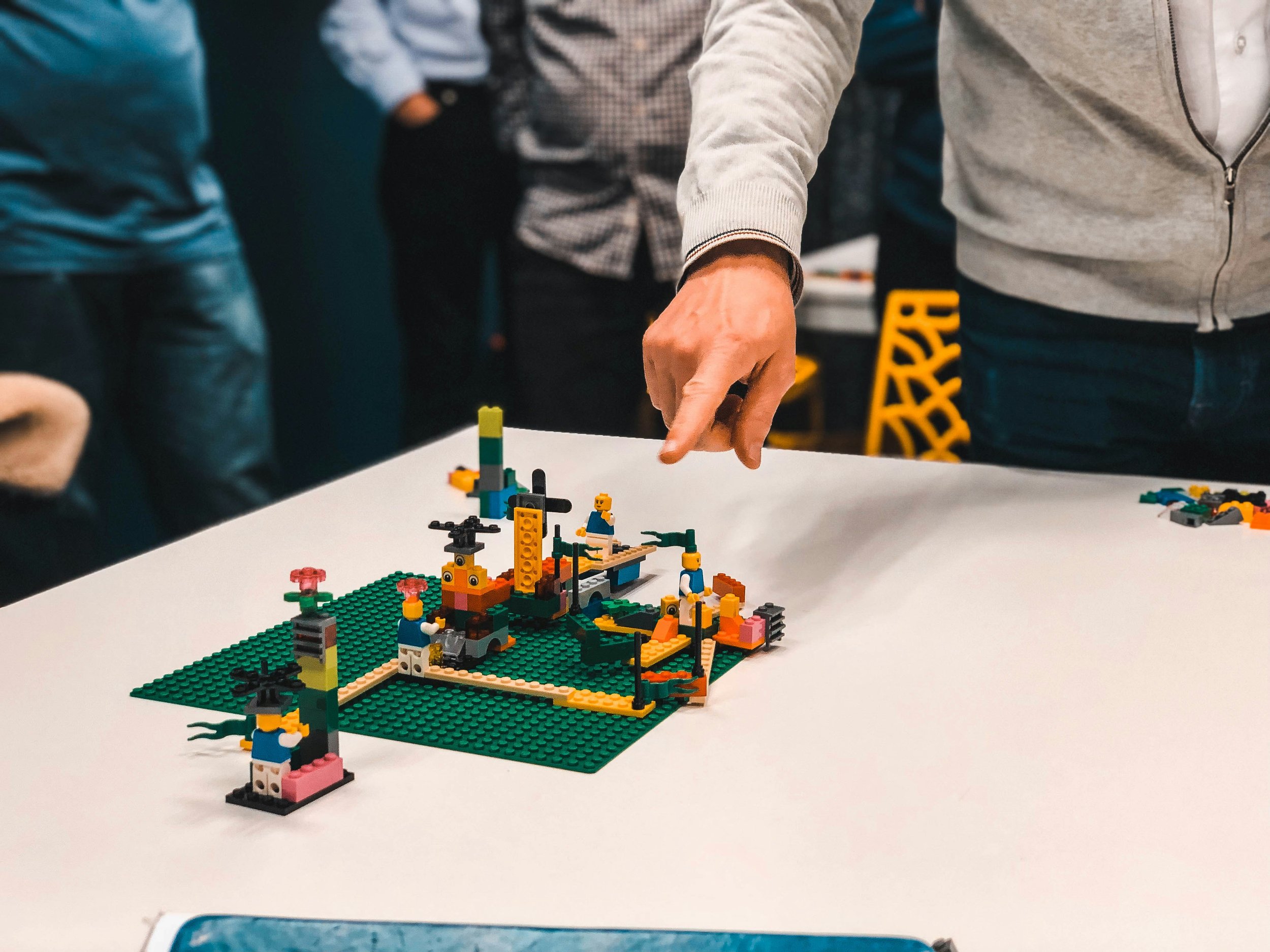
Building the skill of moving through workplace transition well, as a team: redundancy, restructuring, a change in leadership, an AI rollout, or a change in structure, so that each time it happens, the team is better at it than the last.
Two people, the same transition
A Head of Project Management became Head of HR as part of a redundancy programme, a role they loved. They couldn't move past what they'd watched happen to their colleagues. The drag was real. It just didn't have a name, and nobody had shown them a way through it. They're still stuck at Block: the thing in the way was never found, let alone moved.
A designer watched close colleagues get made redundant and found themself carrying their anger and grief as if it were their own. Two LEGO® SERIOUS PLAY® building sessions were enough to surface what they actually felt, and why. Once they could see it laid out in front of them, they realised the grief wasn't theirs to carry. They moved into curiosity instead. They’re through Block and into Build, starting to move forward again rather than spending their energy holding on.
Same kind of disruption. Different outcome.
That's a skill, not a trait, and it can be built. Make Transition Work is how &Koh helps a team find its own agency to build it, and keep building it forward.
Two individuals, told separately, is the clearest way to show what the skill looks like. In practice, though, this rarely plays out one person at a time. A Head of HR stuck at Block and a UX designer through into Build are very often sitting in the same team, going through the same restructure, and neither one knows where the other actually is. That's the real problem &Koh works on: not one person's transition, but a team's, where different people are stuck in different places and nobody has a shared way of talking about it.
The Bridges Transition Model, the basis for this work
Make Transition Work is built on William Bridges' Transition Model, a well-established way of understanding change that has been used in organisational psychology for decades. It isn't something invented here. It's a grounded, tested foundation, and the reason it works is that it separates the event of change from the actual experience of moving through it.
Bridges' model describes three phases:
Ending, losing, letting go. The phase where something familiar is taken away, whether that's a role, a team structure, a sense of security, or a way of seeing yourself. This is where grief tends to live, and where most people, and most teams, get stuck, often without realising that's what's happening.
The neutral zone. The disorienting middle, where the old way is gone but the new way hasn't taken shape yet. Productivity and confidence often dip here, not because anything is wrong, but because this phase is genuinely hard to be in.
The new beginning. Where a new identity, understanding, or way of working starts to take hold, and energy starts moving forward again rather than being spent on holding on.
The Head of HR, above, is still in Ending. The designer is just through the neutral zone, at the start of a new beginning. In a team, this is normal: different people sit in different phases at the same time, even though they're going through the same change. Bridges' model is what makes it possible to say that with precision, rather than everyone just noting that some people seem to be "doing better" than others.
Everything in Make Transition Work, the building sessions, the diagnostic, the workbooks, is designed to help a team locate where each person actually is in this model, and to build the shared skill of moving through it together.
Why building, not talking
Most of what makes a transition hard never gets said out loud, not because people are hiding it, but because it's genuinely difficult to talk about something you can't quite see the shape of yet. In a team, this compounds: everyone's half-carrying something, and no single conversation gives the whole team a way to say it at once.
Built in LEGO® SERIOUS PLAY®, that same thing stops being a feeling each person is stuck inside alone and becomes something the whole team can look at, turn round, and change together, without anyone having to commit to a position out loud before they're ready to. Block goes into why this works in more depth.
The system of the unexpressed
Underneath the building sits a further idea, developed with Sean Blair, author of The Systems Synergy: the dynamics that actually shape how people and organisations behave are rarely the ones anyone says out loud.
Not because people are hiding something. Most of it isn't conscious. It's the tension a team half-feels but nobody names, the grief nobody scheduled time for, the misalignment that shows up as low energy in a meeting rather than open disagreement.
A team that's just been through a redundancy round might, on paper, look like it's moved on. Meetings run as normal, deadlines get hit, nobody raises anything unusual. What's often actually happening is quieter: people saying less than they used to, decisions taking longer to land, a kind of caution that wasn't there before. Nobody names it, because there's no natural moment in a normal working day to do so, and because most people on the team couldn't fully articulate it even if asked directly. That unnamed layer is the system of the unexpressed at work, and it's usually still shaping how the team operates long after the change itself is officially over.
This is what distinguishes Make Transition Work from a generic systems-thinking or team-building approach. It isn't building for the sake of a workshop exercise, and it isn't systems thinking applied abstractly to a business process. It's a specific claim: that the real system shaping a team's transition is rarely the one anyone would describe if you asked them directly, and that this hidden layer is exactly what needs surfacing before Block can genuinely be found and moved.
The system of the unexpressed isn't a separate service, and it doesn't sit on its own page. It's the reason LSP is used here at a systems level rather than as a one-off icebreaker, and it's the thread running through Block, Build, and Practice alike.
How it works
A team going through a restructure, a redundancy round, or a change in leadership doesn't just have individuals each stuck in their own version of Block. It has a shared block, often one nobody on the team has said out loud to each other, let alone to the person leading them.
Start here: the Block session (2 - 2.5 hours)
A live, hands-on session for a team wanting to find out what's actually holding it up, not the transition in general, the specific thing. No prior experience of LEGO® SERIOUS PLAY® is needed, just a team, some LEGO to build with, and a change they're currently living through together.
Most teams don't struggle to name the change they're in. They struggle to name what's actually in their way, and that's rarely because nobody's noticed it. More often it's something nobody's quite said out loud, or something the team's been quietly organised around without anyone naming it as a thing at all. Block is built to surface that, and to show a team something it couldn't easily see by simply talking about it: who's actually stuck where, and how differently people in the same team can be experiencing the same change.
This is the first step in Block.Build.Begin. Nothing else works until this has been found.
Go deeper: Block.Build.Begin. programme
Block gives a team its first real look at what's actually in its way. This is where the rest of the work happens, as a team, not just in parallel as individuals. It starts with a discovery session, to understand the team's situation before anything is scoped. From there, the work runs in three phases, each with its own job to do:
Block. Find the specific thing holding this team up, not the transition in general. For a team, this is rarely one person's issue. It's usually a shared, unnamed tension, an unaddressed loss, or a misalignment nobody has said out loud in the room together. This maps onto Bridges' Ending phase. Nothing else works until this is found and moved, as a team.
Build. Once the block is cleared, this is where transition agility itself gets trained collectively: the team's shared skill of moving through disorientation without losing its footing, or its sense of itself. This maps onto Bridges' Neutral Zone, the genuinely hard middle where the old way of working is gone and the new one hasn't taken shape yet.
Begin. With the block cleared and the skill built, this is where the new way of working actually starts, the team beginning to put what they've built into practice, not a resolved feeling about the past, but a new habit taking its first steps. This maps onto Bridges' New Beginning, and it's the start of transition agility as a team capability that compounds, so the next change is met with a habit already forming, rather than starting from zero again.
Each phase is designed to leave the team with more than a resolved feeling about this transition. It's designed to leave them better equipped, together, for the next one.
AI adoption is a transition too
What you've just seen in Block.Build.Begin is one team, moving through one catalyst. But the capability it builds doesn't stay tied to that one event. Most support around workplace change treats each transition as its own isolated thing: get through this one, then move on. That framing misses something important, especially for a team. The capacity to move through change well isn't fixed, and it isn't just about this redundancy round or this restructure. It's a skill that compounds, and for a team it's a shared one. Build it once, properly, and the next transition, and the one after that, gets easier for the team to carry, together, rather than each person absorbing it alone.
That skill is transition agility: the ability to move through change without losing your footing, or your sense of who you are, individually and as a team, and to come out the other side more capable of doing it again.
The skill transfers. Redundancy and restructuring aren't the only place it shows up.
A team lead spent fifteen years becoming the person others went to when something needed to be right the first time. Six months into her company's AI rollout, a junior colleague produces in an afternoon what used to take her the better part of a week. Nobody made her redundant. Nobody said anything at all. She still has her job, her title, her team. What she no longer has is certainty about what the fifteen years were actually for.
Unlike redundancy or restructuring, there's no event here. No leaving do for a skill that quietly stopped mattering, no last day, no flowers, which is exactly why this kind of Ending gets skipped past so easily. There's no obvious moment to mark, so it's assumed there's nothing to mark. The Ending, Neutral Zone, and New Beginning are still there. They're just harder to see, and easier for a team to walk past without anyone naming what's actually happening.
That's the whole point of transition agility: it isn't built for one kind of change. It's built for the next one, whatever shape that turns out to take. This is what Make Transition Work is for, not a one-off intervention for one person, or a generic offsite for the team, but a way of building a capability that stays with the team, and travels with them to whatever comes next.
Why AI Adoption Is a Human Transition, Not a Technical One
Most AI rollouts get sold as a technology story. The research says otherwise, BCG puts the failure rate at 70%, with the cause traced to culture, not the tool. This whitepaper makes the case that AI adoption is a transition like any other, using Bridges' model to show what's actually blocking teams, and what moving through it well looks like.
The Space Between “I’ll Be Replaced” and “I’m Fine”: What AI adoption looks like through a team lens
Ask most people what's happening to them in an AI rollout and you'll likely get one of these three answers: they'll be replaced, their work's being automated, or they don't know where to start. None of these are wrong exactly, they're just the only stories anyone's actually been given. This essay follows one team through six months of AI adoption to show what's really going on underneath, and names the pattern we're calling transition ambiguity.
Transition doesn't always mean loss
Most of what this page describes involves something being let go of, a role, a structure, a way of seeing yourself, and Bridges' model is built for exactly that. But not every transition starts with loss. Sometimes it's a shift from one understanding to another, from assuming you already know how something works to seeing it differently, and choosing to act on that. The case study below is that kind of transition.“
I loved the session, it was actually a lot more fun than I expected, and it was really helpful at bringing emotion into the conversation, and uncovering distance, confusion, relationships, assumptions, while also giving us a healthier, non-confrontational way of critiquing each other's thinking.
~Global christian charity, Director Digital Strategy
Case study: from mapping digital to understanding it
A Christian charity had spent time mapping where digital fitted into their work, a useful reference, but abstract, the kind of map easy to agree with and hard to actually feel. To test whether it held up, three people built individually in LEGO® SERIOUS PLAY®, in response to a single question: what does real, authentic engagement actually look like, and where does digital belong in it.What came out of the builds surprised the people who made them. Two had assumed the area they were focused on, conversations about faith, was already crowded, with little room for anything new. Their own models pointed somewhere else entirely: people in leadership roles who had nowhere to have the harder conversations themselves, always convening space for others, never quite finding it for themselves. A third build reframed digital away from simply delivering content, toward something closer to a relationship, less a channel broadcasting outward, more a presence people could actually be in dialogue with.None of this came from the map. It came from building, individually, then setting the models down next to each other and noticing where they genuinely differed, and where, unexpectedly, they didn't. By the end, the team had moved from a documented plan they could describe to an understanding they could feel, and named a real gap in their thinking that the map alone had missed.Here’s what surfacing looked like during a Block session for this global christian charity.
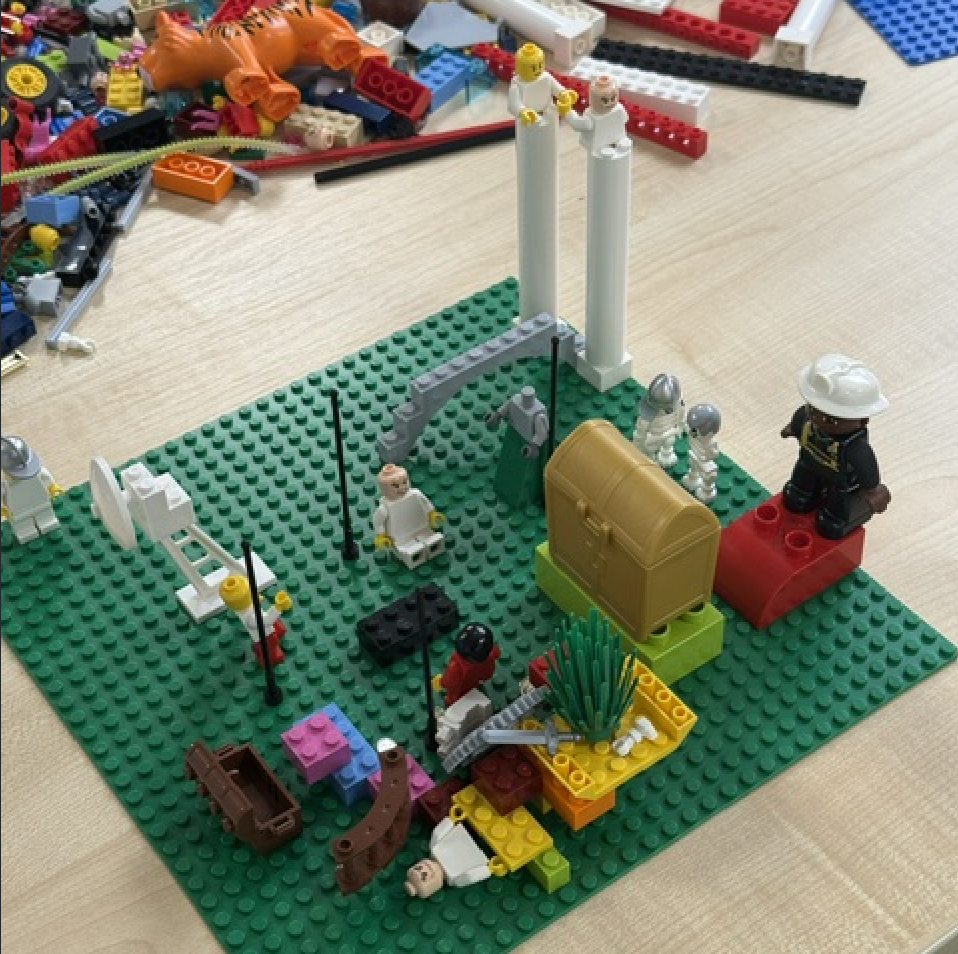
Build 1 traces digital's role moving from something flat and transactional toward something richer and more relational, gaining more colour along the way.
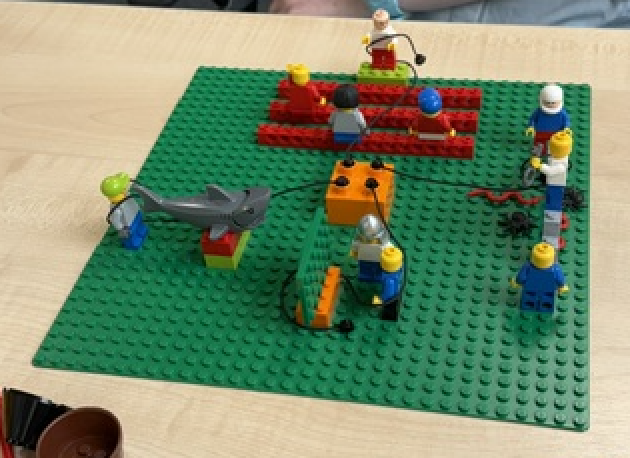
Build 2 reframes digital away from broadcasting content toward hosting genuine conversation, shifting digital to be a place where people actually gather.
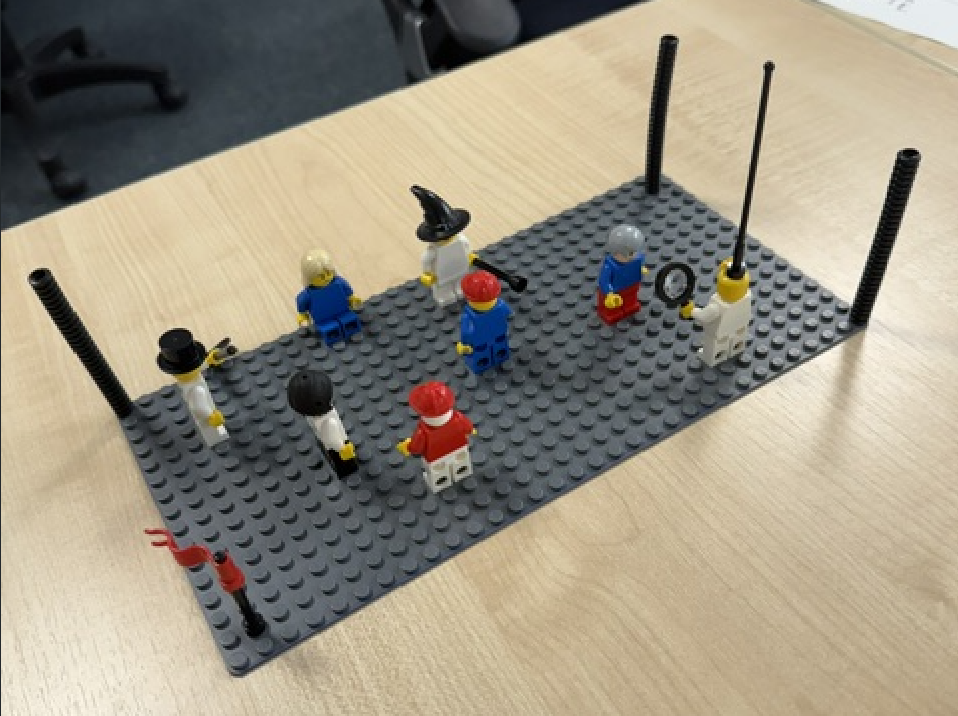
Build 3 captures digital moving from something people simply consult to a friend they're in dialogue with, from information source to authentic relationship.
Latest Posts on Make Transition Work
Free resources
A team is made up of individuals, and these resources are for the people within it, alongside the team-level work above:Right Now and When You're Ready checklists, for immediate practical support after a redundancy conversationUnfinished Business workbook, a full fourteen-pattern guide to workplace transition, with neurodivergent-specific notes throughout (available shortly)The Origins of Transition Agility, a whitepaper tracing the framework's intellectual lineage (available shortly)From Transition Dissonance to Resonance, Grief Literacy, Patterns, and Playing With Futures, a fuller guide for people living through restructure and uncertainty, with the patterns, the three phases, and practical tools
Where you are now, an AI-powered diagnostic: answer 9 questions to help you understand what might be happening to you following redundancy, and where you sit in the transitionWhy AI Adoption Is a Human Transition, Not a Technical One, on why AI rollouts fail on people rather than technology, and what moving a team through it well actually looks like
The Transition Canvas, a single sheet for each phase, the natural companion to the Practice phase, something to work through in your own time, at your own pace (available shortly)Make Transition Work, where Guy writes regularly about what people actually go through during transition, and how to build transition agility and reclaim agency